


Block 4 — Tharu United Community House
Discover shared practices and regional variety across Tharu communities. This block brings together household settings, animal care, weaving, shrines and dance displays from different community traditions.
Livestock Shelter — Pali Ghar
The Pali Ghar display shows a shelter associated with the house where domestic animals were kept. The accompanying scenes introduce the care of cattle, buffalo, sheep and other livestock.
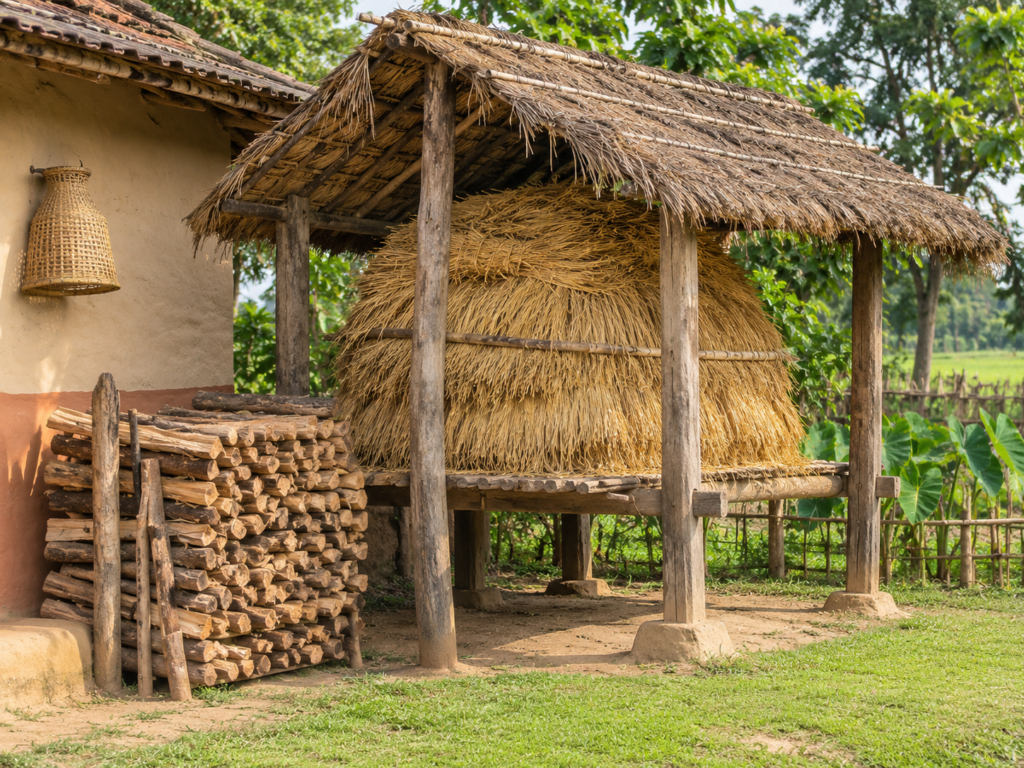
Straw and Fuel Storage
Stored straw supplied animal feed when fresh grass was scarce. Stacks of firewood and dried dung cakes show how households prepared fuel for cooking and warmth.
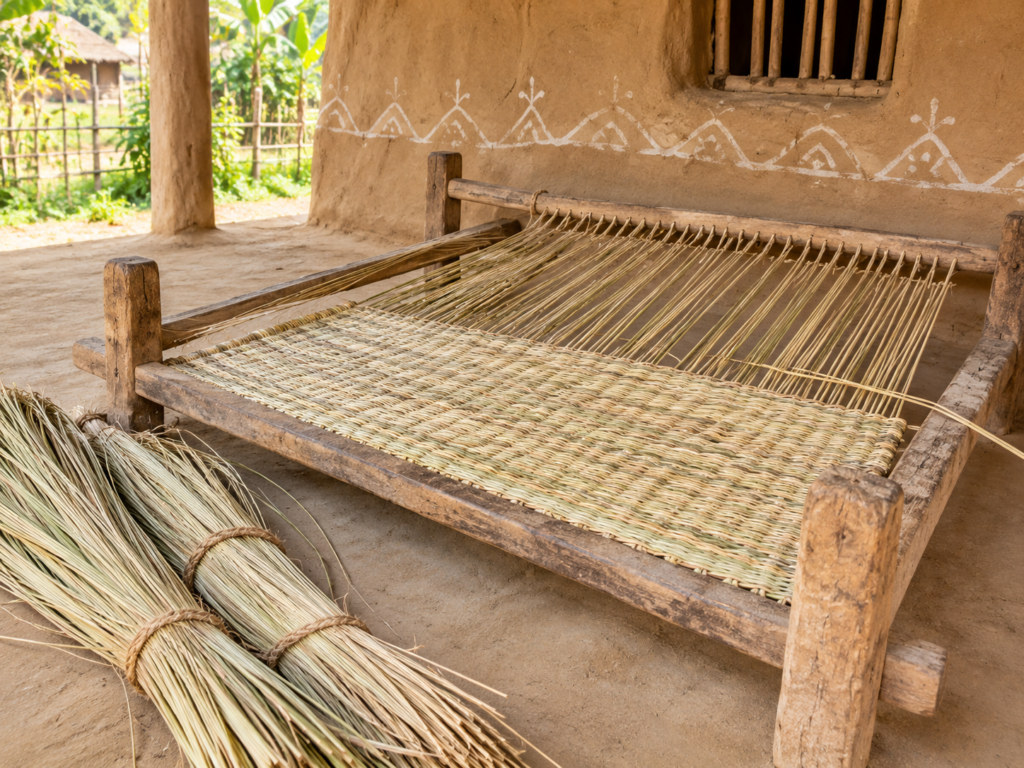
Traditional Mat Weaving
The mat-weaving scene shows people working together using traditional equipment and materials. The catalogue also connects woven mats with gifts taken by a newly married man to his in-laws.
Marwa — Family Deity Shrine
The Marwa is a small shrine associated with family deities. The catalogue notes that its presence varies between households and lineages, so it should not be treated as a feature of every Tharu home.
Regional Houses and Kitchens
Deukhuriya and Chitwaniya house displays introduce regional building forms and domestic arrangements. Kitchens, grain-processing scenes and decorated walls show different expressions of household life.
Regional Dances
Displays include Barka, Deukhuriya Jhumra, Morang, Chitwan stick dance and Rana Hori. Together, these scenes introduce the variety of performance traditions represented across Tharu communities.
← Back to Collections · Next Block: Objects Used from Birth to Death →